Technology Overview
# Animal Tag Microchip: Revolutionizing Pet Safety and Wildlife Management
## Introduction to Animal Tag Microchip Technology
Animal tag microchips have transformed the way we care for and manage animals, from beloved household pets to wildlife conservation efforts. As a pet owner who has experienced the heart-wrenching fear of a lost cat, I can personally attest to the profound relief that comes with having a microchipped animal. The moment my cat, Whiskers, went missing for three days, it was the microchip that enabled the local shelter to quickly identify and contact me, leading to a joyful reunion. This small device, no larger than a grain of rice, carries immense power in safeguarding animal lives.
## How Animal Tag Microchips Work
Animal tag microchips utilize **Radio Frequency Identification (RFID)** technology, specifically operating at 125 kHz, 128 kHz, or 134.2 kHz frequencies, depending on the international standard. The **animal tag microchip** itself is a passive transponder, meaning it has no internal power source. Instead, it is activated by the electromagnetic field generated by a compatible scanner. When scanned, the microchip transmits a unique identification number, which is then cross-referenced in a database to retrieve the owner's contact information.
 ### Technical Specifications and Detailed Parameters
For those interested in the technical aspects, here are detailed specifications for a standard **animal tag microchip**:
* **Chip Type:** Passive RFID transponder
* **Frequency:** 134.2 kHz (ISO 11784/11785 global standard)
### Technical Specifications and Detailed Parameters
For those interested in the technical aspects, here are detailed specifications for a standard **animal tag microchip**:
* **Chip Type:** Passive RFID transponder
* **Frequency:** 134.2 kHz (ISO 11784/11785 global standard)
 * **Chip Code:** Typically a 15-digit numeric code compliant with ISO 11784. The code structure includes a country or manufacturer code, a unique animal ID, and a check digit.
* **Dimensions:** Approximately 1.4 mm in diameter and 8-12 mm in length (varies by manufacturer).
* **Encapsulation:** Biocompatible glass (often soda-lime or borosilicate) coated with a polymer sheath (e.g., Parylene C) for tissue compatibility and to prevent migration.
* **Read Range:** 10-15 cm (4-6 inches) with a compatible scanner.
* **Chip Code:** Typically a 15-digit numeric code compliant with ISO 11784. The code structure includes a country or manufacturer code, a unique animal ID, and a check digit.
* **Dimensions:** Approximately 1.4 mm in diameter and 8-12 mm in length (varies by manufacturer).
* **Encapsulation:** Biocompatible glass (often soda-lime or borosilicate) coated with a polymer sheath (e.g., Parylene C) for tissue compatibility and to prevent migration.
* **Read Range:** 10-15 cm (4-6 inches) with a compatible scanner.
 * **Memory:** Read-only, storing only the unique ID number. Some newer chips may include additional read-write memory for medical data.
* **Expected Lifespan:** 25+ years.
* **Memory:** Read-only, storing only the unique ID number. Some newer chips may include additional read-write memory for medical data.
* **Expected Lifespan:** 25+ years.
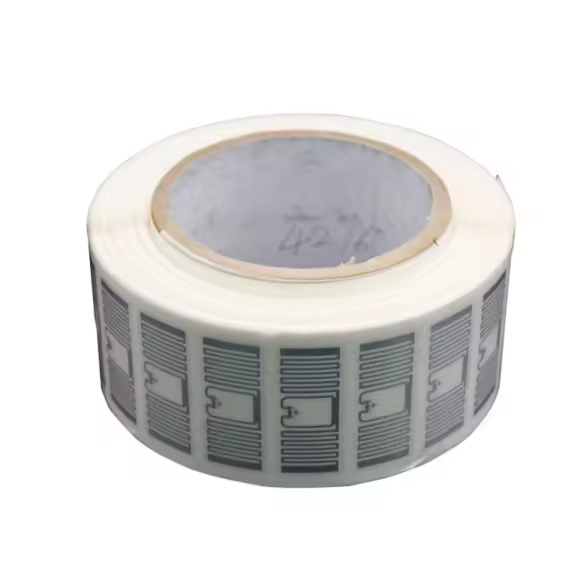 * **Operating Temperature:** -40°C to +70°C.
> **Important Note:** The above technical parameters are for reference and illustrative purposes. Specific chip dimensions, frequencies, and codes can vary by manufacturer and region. For precise
* **Operating Temperature:** -40°C to +70°C.
> **Important Note:** The above technical parameters are for reference and illustrative purposes. Specific chip dimensions, frequencies, and codes can vary by manufacturer and region. For precise